“At first we were attracted to the mysticism of Vodun,” explains singer Chantal Brown, or Oya as she is better known on stage. “Then I thought it would a good idea to shine a light on an Ancestral folklore practice that had been demonised and contorted via time, the Catholic church and slavery, that’s let us arrive at the negative Western view we hold of Voodoo and its related practices today.”
Vodun’s music certainly explores the depths of this west African religion with vitality – and more so, with a positive vibe which merges euphoric celebration and cultural education with rock and roll. It’s a thematic unification rarely experienced, and one not to be missed.
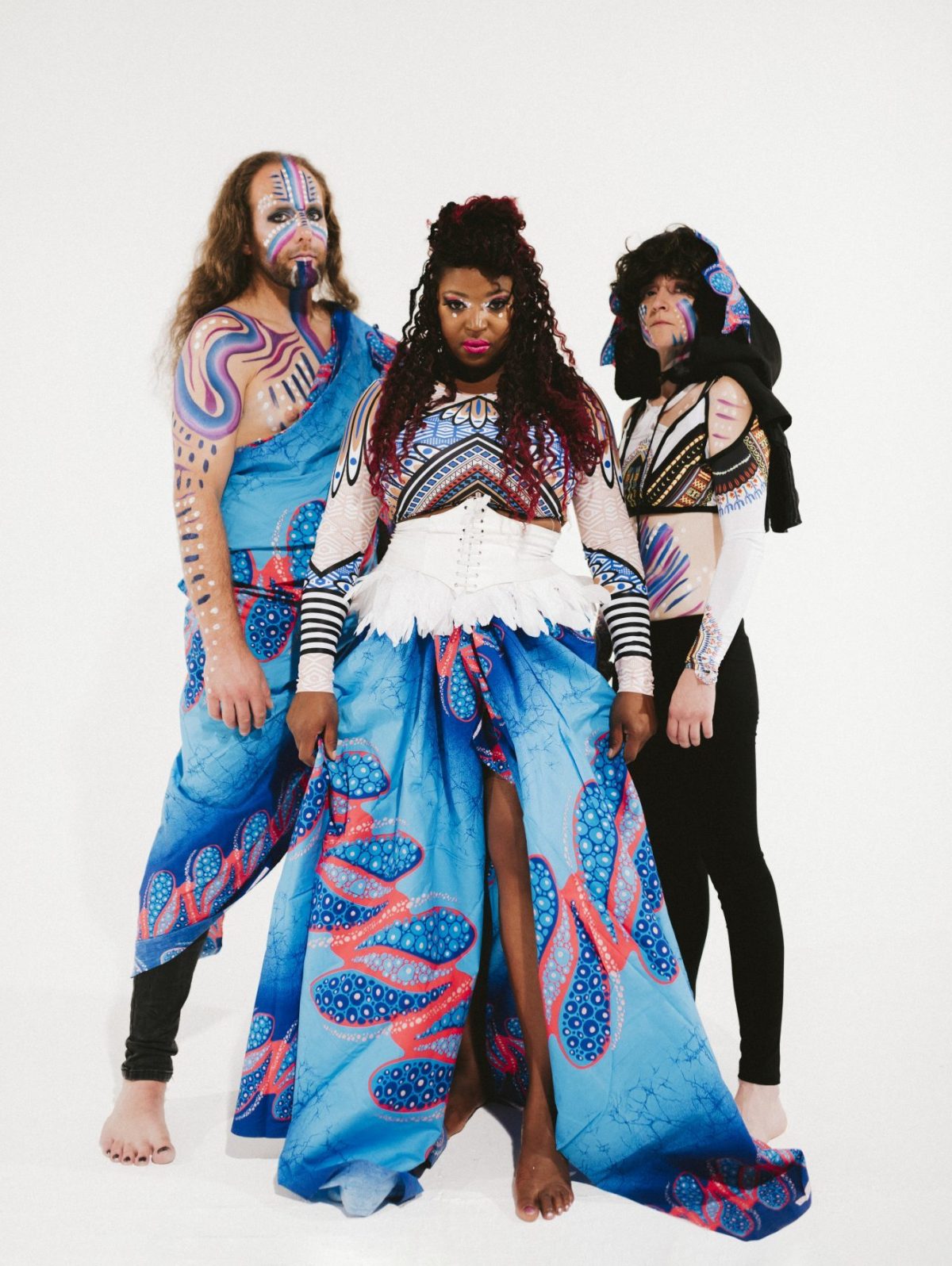
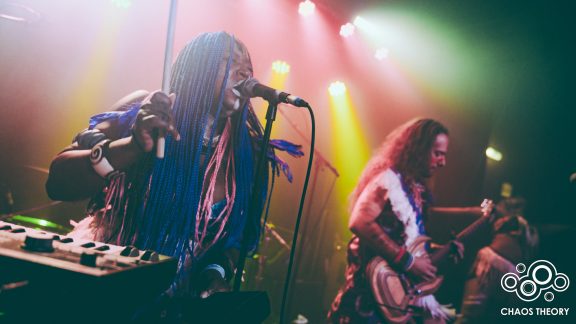
The first thing that hits you is Oya’s strong vocals cutting through the tight, funky riffs; a voice bringing a breath of fresh air to the rock genre. Singer Chantal (Oya) is joined by Lindsay Hamilton (The Marassa) on guitars and Lorena Cachito (Sobo) on drums, and together Vodun exudes strength in every vocal, every beat and heavy riff.
Effortlessly, Vodun draws you in and takes you on a ride. Their debut album Possession (2016) doesn’t hold back in throwing you right into the topic. Entering through the weighty lyrics of Loa’s Kingdom, the playful riffs of Bondeye flow through your body with ease, and continue throughout the 11-track gem of an album. Their second album Ascend (2018) is tighter, more cohesive, and filled with the exploration of broader universal topics to be explored through the eyes of Vodun culture.
Spirits Past
Their ability to keep infusing you with energy at a constant yet changing pace never falters. Take Ogun’s Fight from Ascend: smooth vocals glide over grungy guitars while you ride the waves of African drums dancing harmoniously alongside the expert drumming. If you’re lucky, you’ll catch your hips moving in a sweet moment of exultation as you pass through a selection of saxophones, before heading face first into The Marassas’ rocky guitars.
The two albums compile a collection of such journeys, both musical experiences, and timeless tales shared by song as stories have been since Man first developed language. Never before, however, has it been done with such sexy, grungy attitude. This band are best enjoyed with the speakers turned up loud (or even better, live); Vodun’s melodies are here to engulf you, a possession in their own right.
The spirituality Vodun explores brings a certain type of magic in itself, an extension of the religion they write and perform about, but evolved for a western audience through modern day music. The rhythms created are made for dancing, for celebration (I dare you to stay still during the live rendition of Ritual), as much as the lyrics exist to make you think. Here is a band who celebrate spirituality, animism, feminism and freedom. It is about respect for all things and people, for our past as much as our future. Vodun bring an energy and hope which is perhaps needed now more than ever, as the world continues to darken through the cataclysm of shambled politics and environmental disasters.
Read my interview below with Vodun’s singer Chantal Brown (Oya) to learn more about the making of their second album, influences, and their upcoming gig at 10 Years of Chaos:
Interview with Vodun
Now the name of your band itself, Vodun (meaning Spirit), is named after an ancient religion still practiced in West Africa. Your first album Possession even has some interesting samples of people speaking about the religion in more detail. How has the reaction been to you focusing on this religion?
Mostly of fascination and intrigue, which is a positive thing.
What made you want to focus on West African music and culture as a band?
At first we were attracted to the mysticism of Vodun, and then I thought it would a good idea to shine a light on an Ancestral folklore practice that had been demonised and contorted via time, the Catholic church and slavery, that’s let us arrive at the negative Western view we hold of Voodoo and its related practices today.
Taking something usually seen as dark and evil, and asserting that it’s as positive and as well-meaning as any other spiritual belief system we’re more familiar with. Having people become aware of the practice, aware of the distortion and aware of it’s true standing pleases me.
After this, the music inevitably followed down the road of incorporating more West African rhythms, delving into Fela Kuti more, more ethnic beats of the African Diaspora in general, and merging that with the heavy music we had already been creating.
“I thought it would a good idea to shine a light on an Ancestral folklore practice that had been demonised and contorted via time […] Taking something usually seen as dark and evil, and asserting that it’s as positive and as well-meaning as any other spiritual belief system we’re more familiar with.”
Embodying the spirits
You’ve all taken on alternative names: Oya, Marassa, Sobo. Can you share what led you to do this?
The idea behind creating stage personas isn’t an original one, however it helps channel our energies for our performances. Finding Spirits (Loa’s) who we felt generally matched with aspects of our personalities and trying to embody that on stage. To give you an idea:
Oya: the conductor at the centre of the destruction and chaos. Channelling spirits past and futures unknown she unleashes the possession in other worldly chants and unearthly melodies. Oya is the spirit of change, and she makes room for vibrant new growth.
Sobo: from a new nation of spirits born directly from the elemental spirits reflecting healing, power and the security that comes with leaders of the sky. Drums, dancing, and rhythm are thunderous and purposeful, signalling a new beginning.
Marassa: summons a tidal cacophony with his fingertips that wails and thunders into the resonant mountains. He unleashes the twin spirits within, as the electric swordsman of two halves. A healer and a troublemaker, consuming all in his wake – and spewing forth a divine power.
Do you think being a part of Vodun has grown any of you personally or encouraged you to see the world differently?
Of course! I think we’ve all grown over the years, as everyone does, however being in a band has its particular set of personal challenges. Trying to stay together is definitely one of them. It hasn’t been easy to hold onto Vodun, and one of the things I’ve learned is to have more patience and compassion with people in general. It’s tough to put into practice at times, but we can only try. It definitely helps to circumvent ‘riot in a teacup’ moments.
Ascend (2018)
Your latest album Ascend focuses on the theme of ancestry – it’s an incredible selection of songs! How was the journey making this second album?
Tough. Three different people with three different lives, and at times three different sets of values. For all of the hurdles of the making the dreaded ‘second album’, we managed to pull out every last ounce of energy left for Vodun to do our homework, sitting down with our own internal workings and collectively make something we are really proud of.
“It hasn’t been easy to hold onto Vodun, and one of the things I’ve learned is to have more patience and compassion with people in general.”
Many of your songs have the overarching themes of freedom, strength and feminism; things that aren’t often explored in alternative music scenes. How does it feel to be a voice spreading these messages? Do you think it’s part of why people connect with your music so much?
As I mentioned before, if shining a positive light on the practices of my Diaspora pleases me, so does shining a positive light on the strength and power of feminine energy/feminism/womanism. I can only hope that people connect with the lyrics as much as the riffs.
I do think that we’re speaking to an experience of a pretty niche group of people within the heavy community, as it’s ultimately not dominated by women or people of colour. I do however think that putting these issues at the centre might make people respect that, and actually enjoy that rebellious spirit.
The bigger picture
In the song Spirits Past and throughout Ascend, you sing about turning to your ancestors for guidance. Is this based on something you do personally or a broader, philosophical idea we should all take on board?
The theme of turning to the ancestors came right at the height of the epidemic of Nationalism sweeping the political Western world, giving rise to levels of racism and xenophobia that I’d thought we’d seen the back of. It was a thought of just taking a look in the rear view mirror of our society… opening a god damn history book to see that this kind of attitude isn’t the way forward, and perhaps we might need the strength and tenacity once shown by our ancestors to overcome what we seem to be facing again. It’s a simple concept we all generally practice… learning from past mistakes – seems easy… However, some just can’t seem to grasp that concept at times, I guess.
Are there any songs which any of you share a special connection with?
‘For Your Kin’ was written as the last track for the album, a simple swelling repetitive riff. My Grandma had recently passed, and I thought it would be fitting to honour her on the album, on that song. (Makes me well up just thinking about it, I couldn’t quite hold it together by the end of the song either). She was born and raised in Norfolk, Virginia in the US, in the Jim Crow era, and as you can imagine, had to weather quite a few storms to raise a family & pass down as much as she could. A devout Black Christian, with Native American in her blood, a golden voice and silver hair. Yeah, that was Grandma…
What do you hope people will take away with them, or be inspired by, when listening to your music?
Musically, a growing taste for something a little different to what they’d usually listen to. Conceptually, inspired by our rebellion against conforming to some of the things we’re told to just accept, like putting limitations on your creativity, your freedom and your ability, just based on your gender, your ethnicity, and your social standing.
10 Years of Chaos Festival
So this isn’t the first time you’ve worked with Chaos Theory; how does it feel to be working with them again, especially as part of the 10 Years of Chaos Festival?
To be honest, it’s been the reinvigorating engine starter we needed to push forward, so we’re eternally grateful, and thoroughly excited to be a part of the festival.
What can audiences expect from your gig at 10YOC in London?
A colourful and energetic show, a new song made with our new drummer Lorena (Sobo), more bari sax courtesy of Oli Sellwood from A Sweet Niche, and a few others joining us on stage to add to the music and performance.
Is there anything else that you would like to share with Chaos Theory fans who’ll be attending 10YOC Festival next month?
Bring some percussion, it’s gonna be a party!
Written by Natalia Joruk
10 Years of Chaos will take place at joint venues The Dome, Tufnell Park and Boston Music Room on 29th February 2020, followed by the Towards Collapse Takeover from 11pm- 3am. Buy tickets here before they sell out!
Written by Natalia Joruk
Video by Peter Junge